
English| EUR
Suggested for you
More currencies
Choose a language
The Costa Brava starts where Barcelona's commuter coast ends, at a border most visitors cross without noticing it. This Costa Brava day trip from Barcelona by train guide sets out what the railway actually reaches, what it does not, and how the shoreline is structured for a single day. Expect the practical answer rather than a wish list.
Quick answer
Yes, and arriving costs nothing: the Costa Brava is free to enter at 0 EUR, an open coastline rather than a gated site, accessible 00:00–23:59 every day. Rail from Barcelona serves the region's gateway towns, with onward buses and boats to the smaller coves. Aim to arrive between 08:00 and 10:00, since summer congestion builds sharply after mid-morning.
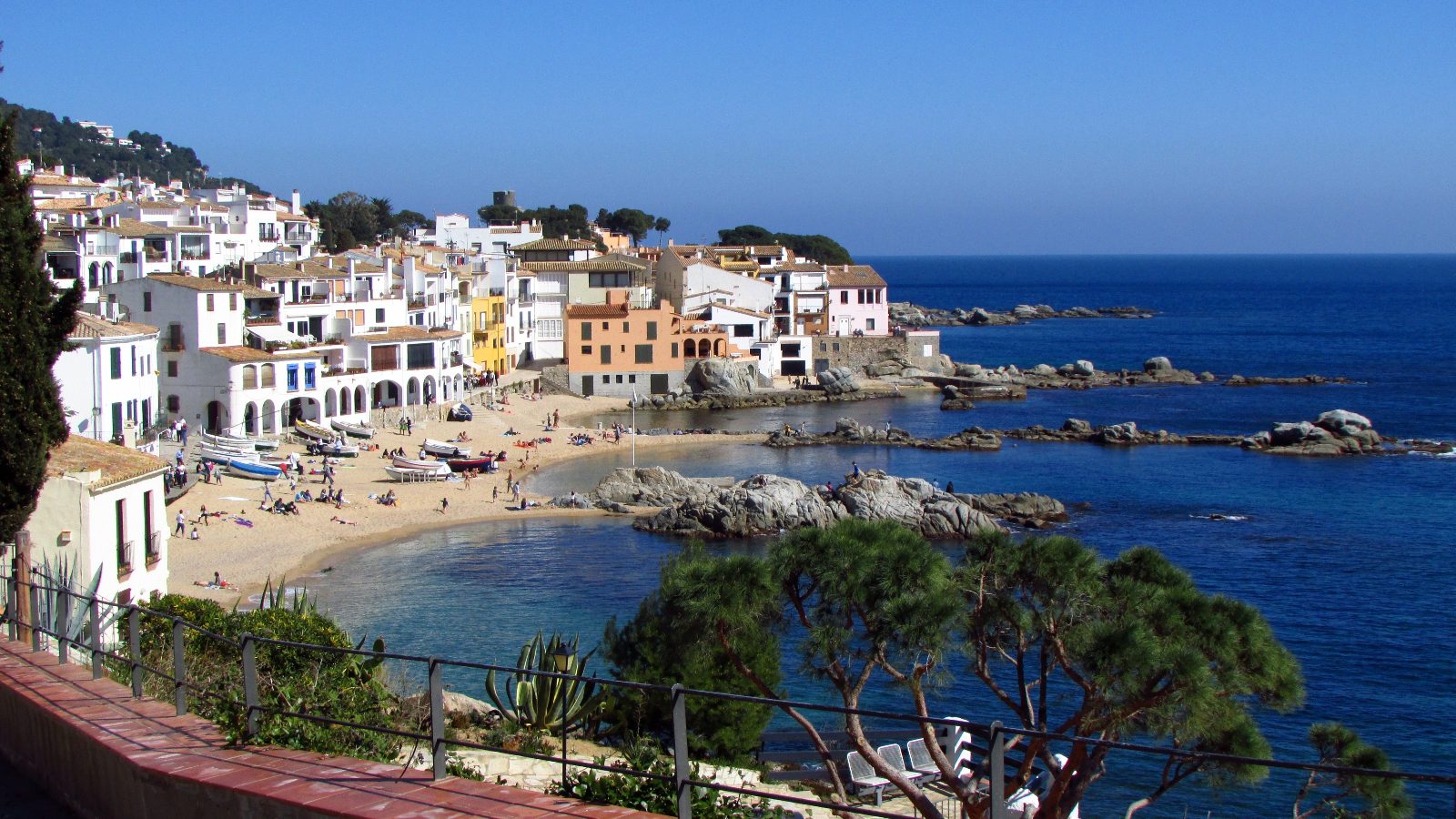
The name is barely a century old. A Catalan journalist, Ferran Agulló, coined the phrase Costa Brava in 1908 for the rugged shoreline north of Blanes. The label drew a line that still governs travel today: south of it lies the Maresme, a commuter coast; north of it lies Girona province and its coves. Anyone weighing a Costa Brava day trip from Barcelona by train inherits that division, because the railway was built for the Maresme, not for the cliffs beyond. Rodalies de Catalunya operates the coastal service that leaves Barcelona and follows the Maresme through Mataró and Calella to Blanes, the first town most maps count as Costa Brava. Inland services run north towards Girona and Figueres, where the Dalí Theatre-Museum sits a short walk from the platforms. No train, however, reaches Tossa de Mar, Calella de Palafrugell or Sa Tuna. Those villages are served by bus, by seasonal boat, or on foot along the Camí de Ronda, the clifftop customs path that now links one cove to the next. A Costa Brava rail excursion from Barcelona is therefore a two-stage journey by design, and it rewards travellers who accept that early. The second thing to absorb is that the coast is not a monument. There is no ticket hall, no turnstile and no closing bell; entry costs nothing, and the shoreline stays open around the clock. What closes is the timetable. Buses thin out in the evening, boats stop earlier still, and the last connection back is the real constraint on the day. Spanish-language listings, which describe the same outing as an excursión de un día a la Costa Brava desde Barcelona, repeat one instruction above all others: start early. Marimurtra, the botanical garden above Blanes, and the sheltered calas near Palamós both fill by mid-morning in August. The practical conclusion is narrow. A Costa Brava day trip from Barcelona by train works best as a single-anchor plan: choose one gateway town, one stretch of coastal path, and one unhurried meal, then leave the rest for another visit. Attempting three villages in a day usually produces three bus stations and little else. The coast is long, the connections are slow, and the reward lies in staying put.
“The coast is long, the connections are slow, and the reward lies in staying put.”
The Costa Brava is located in the Girona Province of Catalonia, Spain. Reaching the region via public transit typically involves a combination of regional rail and local bus connections.
Rodalies R1 line from Barcelona Sants or Plaça de Catalunya to Blanes
Connection from Blanes train station to coastal town centers
Rodalies R11 line from Barcelona Sants to Girona city
To maximize your coastal exploration time, plan for your departure to align with the best arrival window of 08:00–10:00. This early start helps avoid peak congestion on regional train and bus services during the summer months.
The best arrival window for a Costa Brava day trip is 08:00–10:00. Arriving early avoids peak summer train and bus congestion while maximizing daylight hours for coastal exploration.
Mild temperatures of 18°C-24°C
Ideal for coastal paths before peak heat.
Warm temperatures of 25°C-30°C
Expect crowded trains and beaches during midday.
Mild temperatures of 20°C-25°C
Sea remains warm enough for swimming.
—
Trains are less crowded than on weekends.
Verdict: The best time for your trip is mid-week during May, June, or September, ensuring you arrive between 08:00–10:00 to avoid congestion.
This plan suits first-time visitors with one full day, arriving in the 08:00–10:00 window and pairing rail travel with time on foot in a single coastal town. Expect roughly eleven hours door to door from Barcelona.
Step off at your chosen base — Blanes, Calella de Palafrugell via Flaçà, or Girona for the Sant Feliu connection. Get bearings and grab a coffee before the streets fill.
Spend an hour in the historic centre: Blanes' Sa Palomera rock and the harbour promenade, or Tossa de Mar's Vila Vella walls above the bay. Cobbles are steep in places, so wear proper shoes.
Choose one anchor: the Marimurtra Botanical Garden terraces above Blanes, or a stretch of sand such as Platja de Sa Boadella. Allow 90 minutes, more if you swim.
Follow a marked stretch of the Camí de Ronda between coves. A 45-minute one-way walk is realistic; shade is limited, so carry water.
Sit down for seafood at a harbour restaurant. Kitchens run late here, so 14:00 is normal rather than late.
Hop one town along the coast, or climb to a lighthouse viewpoint such as Far de Sant Sebastià. Budget 90 minutes including the return leg.
Wind down with a final swim, a gelato, or the market streets. Keep 30 minutes spare before you head back.
Start back toward Barcelona with daylight left. Evening services fill quickly in July and August.
The Costa Brava is a coastal region rather than a gated attraction, meaning there are no general admission fees to enter the area. Costs for your visit are determined solely by your chosen transport and activity preferences.
Verdict: A typical adult pays 0 EUR for access to the region, with total trip costs depending entirely on transport and personal spending.
The Costa Brava region is a public coastal area accessible to visitors throughout the week. There are no gates or restricted entry times for the coastline.
Navigate the regional rail network efficiently to maximize your time along the coast.
The train line ends in Blanes; use the local bus connections outside the station to reach more northern coastal towns. Do not expect the train to travel along the entire coastline.
Coastal paths offer limited shade during midday hours, so carry more water than you anticipate needing. Refill stations are sparse once you begin hiking between coves.
Wear closed-toe shoes with grip if you plan to access smaller coves, as the access paths are often unpaved and uneven. Flip-flops are unsuitable for the rocky descents found at many beaches.
Download offline maps of the Girona Province region before departing Barcelona. Signal strength fluctuates significantly in the rocky inlets and coves along the coast.
Check digital displays at Sants or Passeig de Gràcia carefully, as regional trains share tracks with longer-distance services. Ensure your train terminates at Blanes or connects to the correct regional R1 line.
Everything you need to know about costa brava day trip from barcelona by train
Planning a costa brava day trip from barcelona by train is straightforward as the region is well-connected to the city. You can navigate the coastline using regional rail services and local bus links to reach popular coves and historical villages.
There is no entrance fee to explore the region, as the Costa Brava is a public coastal area rather than a gated attraction. You should simply budget for your transit fares and any personal expenses for food or activities.
For the most enjoyable experience, we recommend an arrival window between 08:00 and 10:00. Arriving early helps you avoid peak summer congestion on transit lines and provides more daylight hours for coastal exploration.
Yes, reaching the Girona province from Barcelona is feasible through a combination of rail and bus travel. While the train brings you to key inland hubs, you will often need to transfer to a bus to reach the Mediterranean beaches and rocky cliffs.
The Costa Brava does not have formal opening hours because it is a geographical region that remains accessible to the public from 00:00 to 23:59 every day. This flexibility allows you to customize your itinerary based on train schedules and your personal interests.
You should prepare for a long day of walking along the Camí de Ronda coastal paths and swimming in the Balearic Sea. Pack comfortable footwear, sun protection, and a refillable water bottle to stay hydrated during your maritime adventure.
How to Get to Costa Brava from Barcelona
Read more Tickets & toursCosta Brava Day Tours
Read more Tickets & toursMontserrat, Girona and Costa Brava Day Trip
Read more GuideHow Far is Costa Brava from Barcelona Airport
Read more Tickets & toursPrivate Costa Brava Day Trip
Read more Tickets & toursGirona and Costa Brava Day Trip
Read more Tickets & toursCosta Brava Day Tour with Boat Trip
Read more